Window film for a glazed front door: which film for privacy and security?
By the VitraCare Team
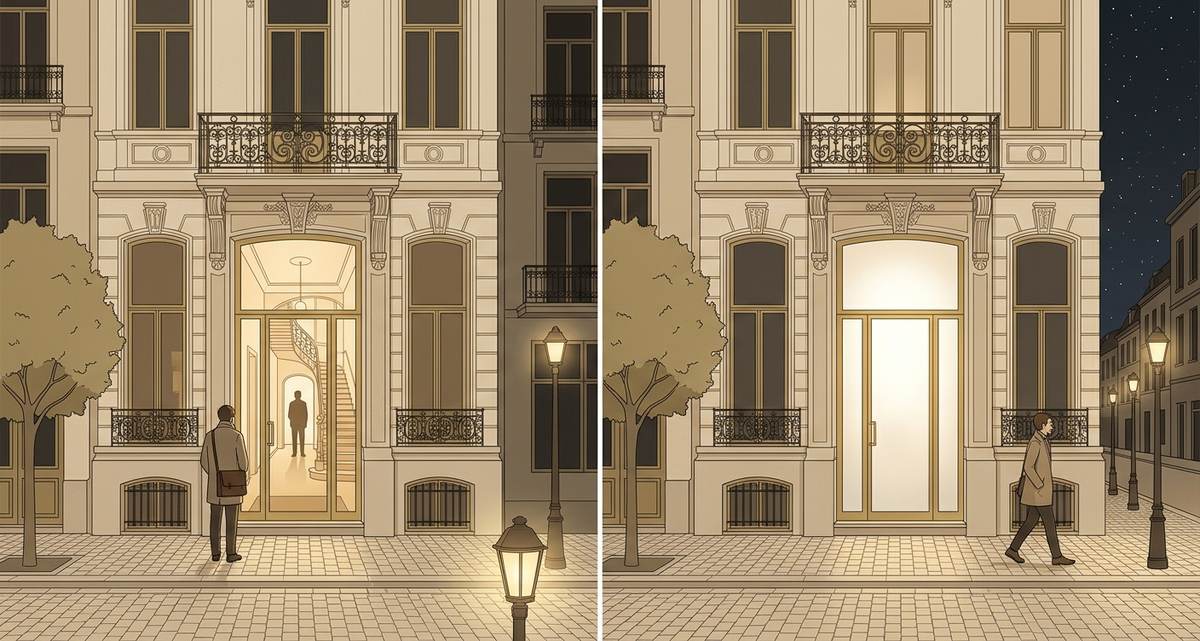
A glazed front door brings light into the hallway, but it often lets people see the whole interior from the street: the hall, the stairs, sometimes part of the living room. It's one of the requests we get most often. The good news: film is applied directly to the door's glass, without replacing the door. You still need to choose the right one, because a front door doesn't have the same constraints as a living room window.
The short answer
For privacy, matte white film is almost always the best choice on a front door: it blocks the view both ways, day and night, while letting light through. Mirror effect film only protects against prying eyes during the day. And if security is your priority, transparent anti-burglary film is what you need.
Why mirror film isn't ideal on a front door
Mirror effect film works as long as it's brighter outside than inside. During the day, passers-by see a reflection instead of your hallway. But in the evening, as soon as the hall light is on and the street is dark, the effect reverses: people can see in again.
And a front door is exactly where you switch the light on when you come home in the evening, or when someone rings. Mirror film therefore protects against prying eyes when you need it least. Our article on transparent privacy film explains this in detail.
Matte white film: privacy day and night
Matte white film, also called opaque, frosted or blackout film, gives the glass a look close to sandblasted glass. It blurs the view both ways, at all times: from the street, the interior can no longer be made out, even in the evening with the light on. Daylight keeps coming into the hallway, just diffused.
The trade-off: from inside, you can no longer clearly see who's at the door. For many hallways, that's not a problem. If you want to keep a view outside, one option is to film only some of the door's panes, if it has several.
Securing a glazed door: anti-burglary film
A glazed door can also be a weak point. The anti-burglary film we install is transparent, EN 356 certified and CE marked. It doesn't make the glass unbreakable: on impact, the glass may crack, but the shards stay stuck to the film instead of falling, which significantly slows down a break-in attempt and limits the risk of injury.
This film doesn't change privacy at all: it's transparent. If you want to both hide the hallway and reinforce the glass, let's talk about it during the measurement visit, to choose based on your priority.
Which film for which need?
The table sums up what each film does on a glazed front door.
| Film | View in during the day | View in at night (light on) | Light in the hallway | Security |
|---|---|---|---|---|
| Matte white | Blocked | Blocked | Comes in, diffused | No |
| Mirror effect | Blocked (reflection) | Visible (effect reverses) | Reduced | No |
| Anti-burglary | Visible | Visible | Comes in | Holds shards, slows a break-in |
← Swipe to see the full table →
How does installation on a door work?
The film is applied directly to the existing glass, without removing the door, in a single visit. It suits single, double and triple glazing. If the door has several small panes, each one gets its own piece of film, cut flush to the frame. We take exact measurements on site before cutting.
If the glazed door is your building's entrance door rather than your own home's, it's usually a common part: the co-ownership then decides. Our article on film in a co-ownership explains what to check.
What does it cost?
There are no prices on the site: the price depends on the surface to be treated and how accessible the glass is, and it's the same whichever film you choose. A front door is usually a small surface. The home measurement visit is free in Brussels, and our article on pricing explains what makes the amount vary.
Installation comes with a 2-year warranty, and the film's lifespan is estimated at 10 to 15 years when installed on the inside.
Still unsure?
Get in touch, we'll advise you for free based on your door and reply within 24 hours.
Frequently Asked Questions
Is mirror film suitable for a front door?
During the day yes, but in the evening, with the hall light on, the effect reverses and people can see in. For a front door, matte white film is usually better suited, because it keeps privacy at all times.
Does matte white film let light through?
Yes. It blurs the view both ways, but daylight keeps coming in, just diffused. The hallway stays bright.
Can anti-burglary film be applied to a glazed door?
Yes. It's applied to the existing glass, stays transparent and, on impact, holds the shards stuck to the film, which slows down a break-in attempt. It doesn't make the glass unbreakable.
Does the door need to be removed to apply the film?
No. The film is applied directly to the glass, with the door in place, in a single visit.
Have a window film project?
GET A QUOTE