Mirror effect film for windows in Brussels: total daytime privacy, without losing the light
By the VitraCare Team
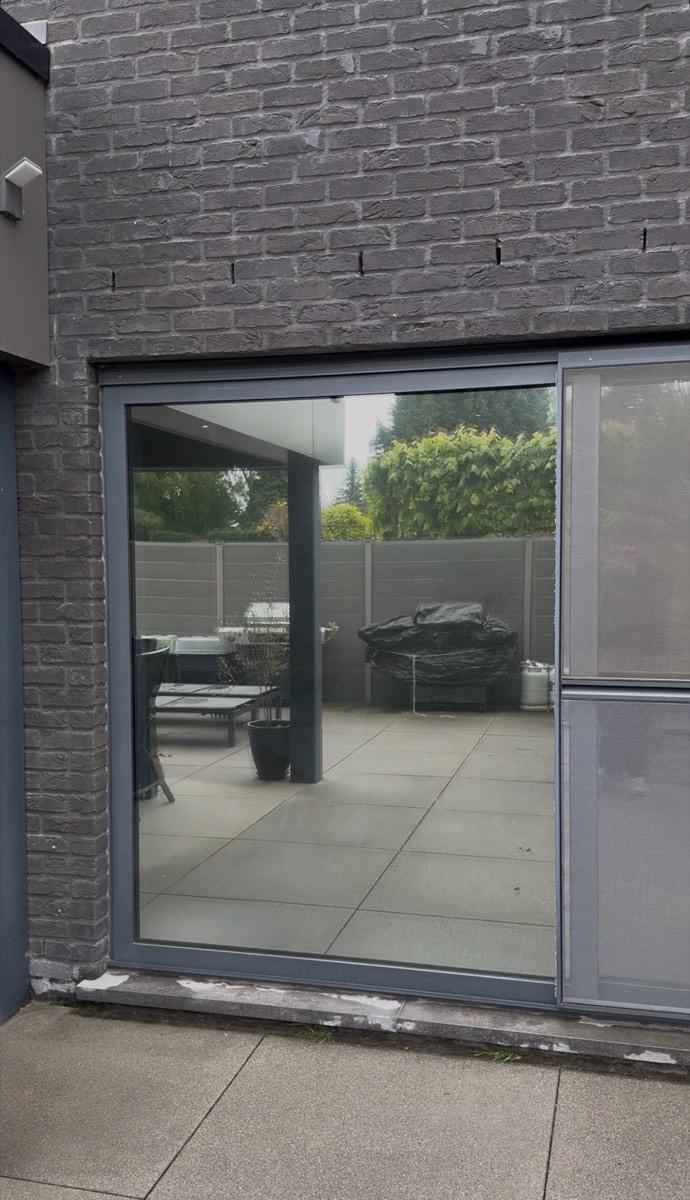
Mirror effect film solves a very concrete problem: being seen from the street, by a neighbour, or from a busy pavement, without having to live behind closed shutters all the time. Applied to your windows, it creates a one-way mirror effect that completely blocks the view from outside during the day, while you keep a perfectly clear view from inside. Here's how it actually works, and when it's the best solution.
How does mirror effect film work?
The principle relies entirely on light, not on an opaque coating on the glass. During the day, the outside is almost always brighter than the inside of a room. The film reflects that light on the outside, creating a mirror effect that blocks the view from inside, exactly like a one-way mirror used for observation.
The flip side of this mechanism, worth knowing before you decide: the effect only works as long as the outside stays brighter than the inside. In the evening, once your lights are on and it's dark outside, the effect reverses, as with any lit window at night. This isn't a flaw in the film, it's normal behaviour, worth keeping in mind depending on the room.
Who is this film for?
It's the best choice for a house facing the street, a ground floor directly overlooking the pavement, or a large window with a view of a garden visible to neighbours. For a flat, it works just as well on windows facing an inner courtyard or another building.
We currently focus on homeowners and renters: houses and flats. If your need concerns an office or a shop, feel free to contact us anyway, but know this isn't our main focus yet today.
Silver or black: what's the difference?
This film comes in two tints. Silver is the classic version described above: a mirror effect that works during the day and reverses in the evening. Black is far more radical: it guarantees privacy even in the evening with the lights on indoors, at the cost of noticeably less light coming in, continuously.
It's a trade-off to make room by room: the black version suits a glazed front door or a secondary window well, far less a living space where natural light matters. The price doesn't change depending on the tint, only the surface area to be treated affects the cost.
How does installation work?
Installation happens in a single visit to your home, directly on your existing windows, with no removal or replacement of the glazing. It's carried out by our collaborator, generally on the interior side of the glass, which supports an optimal lifespan estimated at 10-15 years and is covered by a two-year warranty. Our article on the different steps explains the full process, from measurements to installation.
How much does mirror film installation cost?
There's no fixed price listed: the cost depends on the total surface area to be treated and how accessible the windows are, not on the tint chosen (silver and black cost the same per m²). That's why we always draw up a personalised, free, no-obligation quote. Our article on pricing explains what affects the cost.
Still unsure?
Contact us: we'll advise you for free based on your situation and reply within 24 hours.
Frequently Asked Questions
What's the difference between "mirror effect" and "one-way" film?
None: these are two names for the same product. "One-way" is the technical term, "mirror effect" describes how it looks from outside. Either way, it reflects light on the outside during the day, blocking the view from inside while you keep a clear view from your own home.
Can you see through it from the inside?
Yes, that's the whole point of this film: from inside, the view stays clear and unobstructed, just like through an ordinary window. Only the view from outside is blocked, and only during the day.
Does the film also protect against heat and UV?
Yes, on top of privacy: it blocks 46% to 87% of UV rays depending on the intensity installed, and significantly reduces the heat entering through your windows. Our article on UV protection gives the figures by intensity.
Is this suitable for a flat in a shared building?
The film is applied to the inside of the glass and doesn't change the building's exterior appearance. Depending on the building, a simple notice to the general meeting or the building manager may still be required before works: we recommend checking the co-ownership rules case by case.
Have a window film project?
GET A QUOTE