Window film after fitting: bubbles, haze, drying time and cleaning
By the VitraCare Team
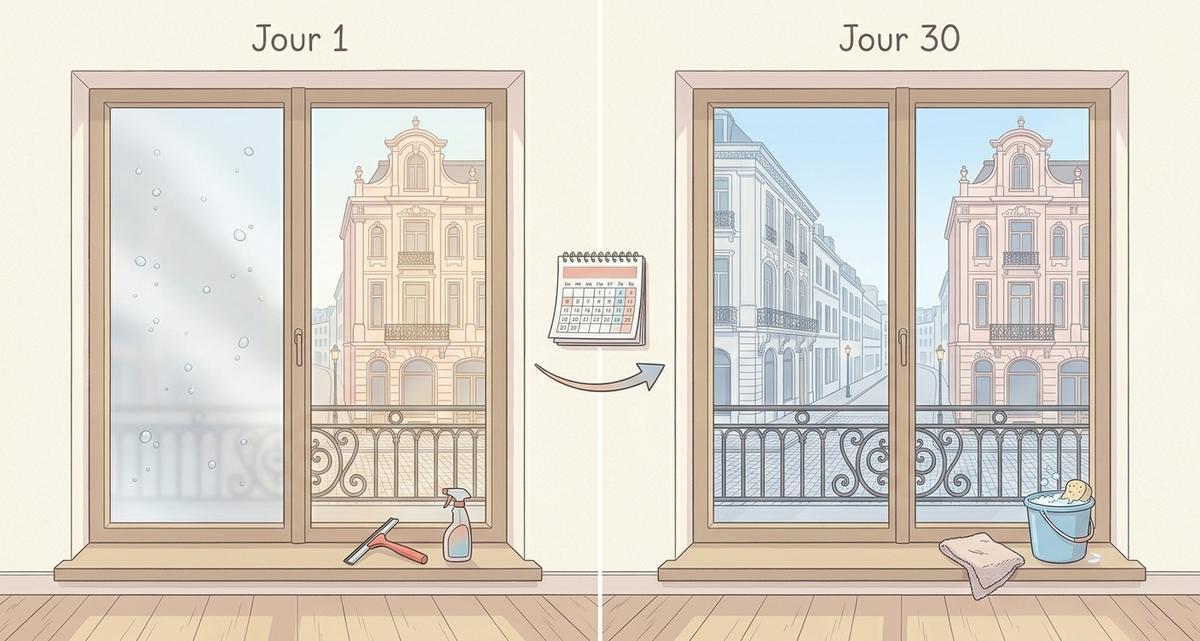
Right after fitting, window film can look slightly cloudy or show a few small bubbles. In the vast majority of cases this is normal and clears on its own. Here is where it comes from, how long it lasts, what to avoid in the meantime, how to clean the film afterwards, and the few signs that do deserve a phone call.
The short answer
Small water bubbles and a milky haze in the first days are normal: it is the fitting water drying out. The film keeps bonding to the glass for about a month, and longer when it is cold, when the window gets little sun or when the film is thick.
During that month, don't touch the bubbles, don't pierce them and don't clean the window. After that, cold or lukewarm water with a mild soap is all you need. An edge that lifts, a crease or a bubble that is still there once the film has dried, on the other hand, is not normal.
Where do the bubbles and haze come from?
Window film is fitted wet. We spray a solution of water and soap on the glass, so the film can be positioned exactly where it should be, then push the water out with a squeegee. The International Window Film Association (IWFA) points this out in its inspection guideline: the excess water is removed, but some water inevitably stays between the film and the glass.
That water causes the slightly milky look or the small bubbles of the first days. It evaporates through the film, and the film bonds better and better. The same guideline states that water bubbles, slight distortion and haze during drying are not to be regarded as defects.
It is also what we see after our own installations: for about thirty days the film keeps bonding to the glass, and the small bubbles disappear with heat and time.
How long does drying take?
It mainly depends on how thick the film is. The IWFA guideline gives these benchmarks:
| Film thickness | Typical drying time |
|---|---|
| Up to 100 microns | About 30 days |
| 100 to 200 microns | About 60 days |
| 200 to 300 microns | About 90 days |
| 300 to 425 microns | About 140 days |
← Swipe to see the full table →
The weather matters too. According to Solar Gard, a window film maker in the Saint-Gobain group, warm weather and direct sun shorten drying, while cold, cloudy conditions and thick films lengthen it. The manufacturer gives a range from a few days to six months.
In Belgium, a winter installation or a north-facing window will therefore often take longer than a summer installation on a south-facing window. The mirror films we fit belong to the thin films in the first row: allow about a month. An anti-burglary film is usually thicker and needs more patience.
While the film dries: what to avoid
Don't touch the bubbles or press on them. A US installer explains in its customer instructions that this slows drying and can damage the film. Don't pierce them either: a water bubble goes away by itself.
Don't clean the filmed window for about a month. That is what we advise our customers. Timings vary between manufacturers and installers, and the same US installer even asks customers to wait 45 days. The month gives the adhesive time to set without the film being rubbed.
Also avoid putting tape or stickers on the film, including static cling stickers, now and later: Solar Gard advises against them, because they can damage the surface or need harsh products to remove.
Rest assured: the film works from day one, even before it is fully dry. The IWFA notes that you already notice less glare and more privacy while it dries, and often less heat.
Normal or not? What you see on the glass
These are the most common situations after an installation, and what they mean:
| What you see | Normal? | What to do |
|---|---|---|
| A milky haze, slightly cloudy view | Yes, it is fitting water | Wait until drying is complete |
| Small water bubbles or slight distortion | Yes, during drying | Wait, without touching or piercing |
| A thin strip without film along the frame, a few millimetres | Yes, it is intentional | Nothing: it stops the film touching the frame and peeling |
| A straight line across a very large pane | Yes, it is a seam | Nothing: it is needed when the pane is wider than the roll in both directions |
| A small speck under the film, with a bubble that doesn't change | Not a water bubble: often dust or a hair trapped during fitting | Report it if it is visible from a normal distance |
| An edge lifting, a crease, a tear | No | Contact us |
← Swipe to see the full table →
The edge gap and the seam are part of professional guidelines: the IWFA and Solar Gard provide for a small gap of a few millimetres along the frame, 1 to 2 mm for most films according to Solar Gard, and the IWFA states that a straight seam parallel to the frame is not a defect.
If a bubble is still there once drying is over, or an edge lifts, send us a photo. Our 2-year warranty covers defects linked to the installation, such as lifting or a bubble caused by poor application. It does not cover damage that happens afterwards, such as a scratch from a pet.
How to judge an installation, the way professionals do
Fitted film will never be exactly as flawless as bare glass, and professional guidelines say so plainly. The IWFA and Solar Gard describe a simple method: look straight at the window, from inside, from at least 2 metres away, in daylight but not in direct sun.
Small flaws you can't see under those conditions are considered acceptable. A band of about 5 cm along the frame is judged more leniently: with an old or damaged frame, a few dust specks there are hard to avoid. Looking at the glass from up close, against the light, is not the method these guidelines use: that close, you see tiny details that are invisible from a normal distance.
Cleaning the glass thoroughly before fitting matters a lot to limit those specks: it is a step in its own right, described in our article on the steps of a window film project. It is also one of the differences with doing it yourself, as our comparison of budget film and professional fitting explains.
After drying: how to clean the film
Good news: film gets dirty more slowly than glass. According to Solar Gard, it is less porous, holds less dirt and needs cleaning less often.
Our advice is simple: cold or lukewarm water with a mild soap, for example an organic washing-up liquid. Wash with a soft cloth or microfibre, and dry with a second clean cloth or a soft rubber squeegee. Solar Gard and XPEL recommend the same thing: a mix of water and mild detergent.
Avoid scouring pads, stiff brushes, scrapers and blades, which scratch the surface. Always use a clean cloth: a single grain of sand left in the fabric is enough to scratch the film.
What about shop-bought glass cleaners?
Manufacturers don't all agree on this. Solar Gard writes that commercial glass cleaners are acceptable but not required. The US installer mentioned above asks for ammonia-free products. And XPEL asks customers to avoid harsh products.
Since you don't always know what a cleaner contains, we advise sticking to water and mild soap: it cleans very well and is safe for every film. If someone else cleans your windows, simply pass these instructions on. For film fitted on the outside, Solar Gard advises rinsing the glass well before washing it, to remove sand and dust that could scratch the film.
If you would rather not deal with it, we also offer window cleaning, with or without film.
How long does well-maintained film last?
Fitted on the inside, a film's lifespan is estimated at 10 to 15 years. It is shorter on the outside, where the film is exposed to the weather and to washing: our article on window film on double glazing compares the two types of fitting.
Maintenance takes almost nothing, but it matters: a film scratched by a scouring pad or damaged by tape can't be repaired, only replaced. Still unsure which film to choose? Our guide to choosing your film compares mirror, solar and matte white film.
Sources
IWFA: Architectural Visual Inspection Guideline for Applied Window Film (2020)
Solar Gard (Saint-Gobain): Visual Inspection & Maintenance of Window Film, tech bulletin (2022)
Solar Gard (Saint-Gobain): Care and Maintenance of Window Film
XPEL: Commercial Care & Maintenance, window film
Solar Art / American Window Film: customer care instructions (2019)
A question after your installation?
Contact us: we'll advise you for free based on your situation and reply within 24 hours.
Frequently Asked Questions
How long does it take for the bubbles to disappear?
For a solar or mirror film, allow about a month. Drying takes longer in cold or cloudy weather, on a window that gets little sun, or with a thick film such as an anti-burglary film. According to Solar Gard, it can range from a few days to six months.
Can you pierce a bubble under the film?
No. A water bubble disappears by itself as the film dries, and piercing it or pressing on it can damage the film. If a bubble remains after drying, send a photo to your installer.
When can you clean a window after film is fitted?
We advise waiting about a month. After that, clean with cold or lukewarm water and a mild soap, using a soft cloth or microfibre, with no scouring pad or scraper.
Does an ordinary glass cleaner damage window film?
Manufacturers disagree: some accept shop-bought cleaners, others ask for ammonia-free products. The safest choice is water with a mild soap, which suits every film.
Have a window film project?
GET A QUOTE