
Window film or air conditioning: which solution actually cools your home without blowing up your energy bill?
By the VitraCare Team
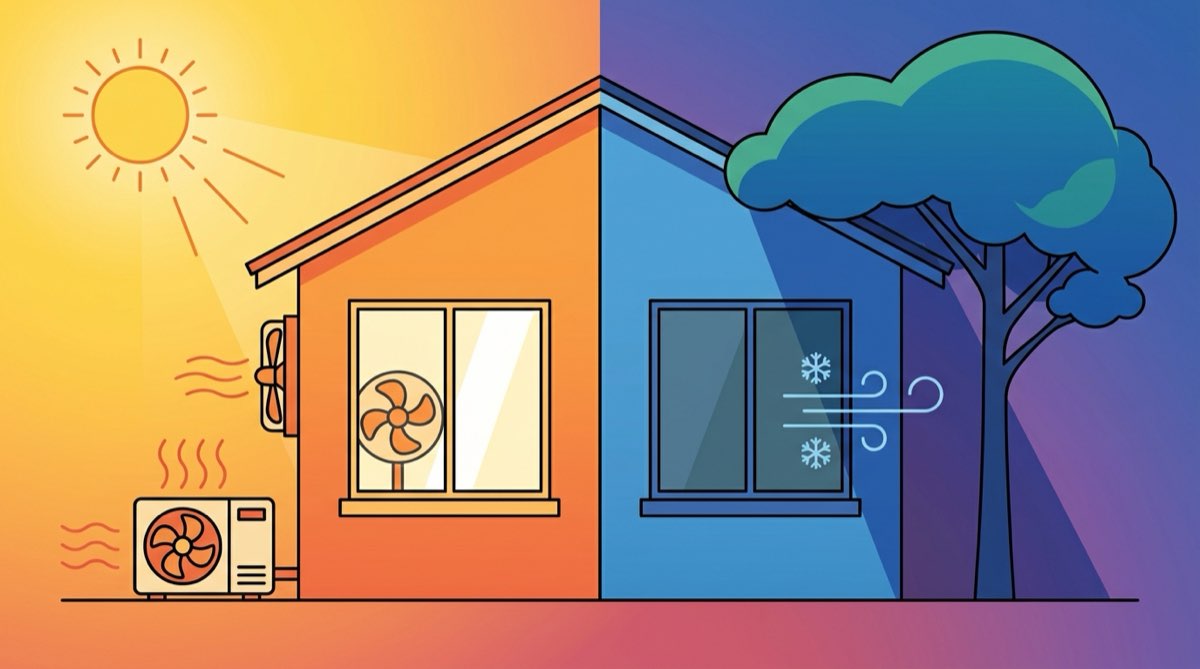
Every summer, it's the same reflex: pull out the fan, or invest in a portable air conditioner. The problem is both consume electricity continuously without ever addressing the real cause: the heat entering through the windows. Window film works the other way around, blocking a large share of that heat before it gets into the room. Here's what independent research shows on the topic.
How many degrees cooler, in practice?
In practice, solar film installations show a 3 to 6°C drop in indoor temperature during summer, mostly in the most exposed rooms: conservatories, glass roofs, and south- or west-facing façades leading the list. The U.S. Department of Energy reaches a similar conclusion: window films can cut cooling-related energy use by up to 30%, by limiting solar heat gain through the glass. That heat gain, according to the same study, accounts for roughly a third of a building's cooling load. In practical terms, that means a room that's barely bearable by early afternoon can become liveable again, simply by cutting the heat off at the source before it enters.
Less air conditioning, lower costs
On buildings fitted with solar film, the industry reports a 20 to 35% reduction in cooling-related energy consumption on the treated façades, according to figures compiled by Wonderglass, which draw in part on recommendations from ADEME, the French ecological transition agency. And unlike an air conditioner, the film has zero running cost once installed: no electricity to pay for, nothing to maintain. That changes the nature of the expense: instead of a bill that climbs every summer with electricity prices, you pay once, and the benefit repeats afterward at no extra cost.
Film, AC, or fan: what's the fundamental difference?
A fan only moves the hot air already inside the room, and doesn't reduce at all the heat still coming in through the glass. An air conditioner actively cools the air, but consumes electricity without interruption and has to keep fighting heat that never stops coming in.
Window film acts further upstream: it directly reduces the amount of solar heat passing through the glass. The result: an existing air conditioner has less work to do (so it consumes less), and if you don't have one, the room simply stays more liveable without switching anything on at all.
Which film for this result?
It's the solar tint that delivers these savings: it stays transparent in both directions while reducing heat, unlike mirror-effect film, which is mainly about privacy. Our dedicated article on this film explains how it works, and our complete guide to choosing your film compares the 4 available tints. For a sense of budget, our article on pricing explains how the quote is calculated.
Sources
Frequently Asked Questions
Isn't that wasted effort come winter?
No, the film also helps retain indoor heat in winter, by limiting heat loss through the glazing. It's an investment that works year-round, not just during summer heat peaks.
Does window film fully replace air conditioning?
Not necessarily in the most extreme cases, but it sharply reduces the need for it. Many of our clients find that a room that used to be unbearable in summer becomes comfortable again, without needing to install or switch on an air conditioner.
Does the film work as well as a fan?
They're not really comparable: a fan circulates the hot air already present, without reducing the heat still coming in. The film acts before heat enters the room at all; the two don't solve the same problem.
Does the film have any maintenance or running costs?
No. Unlike an air conditioner, the film uses no electricity and requires no regular maintenance once installed.
Does this work on all types of glazing?
Our films are compatible with single and double glazing. Since every project is different, we always draw up a free, personalised quote after assessing your situation.
How long does installation take?
Installation is carried out by our collaborator directly at your home, in a single visit. The exact duration depends on the number and size of the windows involved; we'll confirm this in your quote.
Have a window film project?
GET A QUOTE